
Motorcycle modification, Legal bike modifications
Illegal Motorcycle Modifications: Avoid fines and stay safe
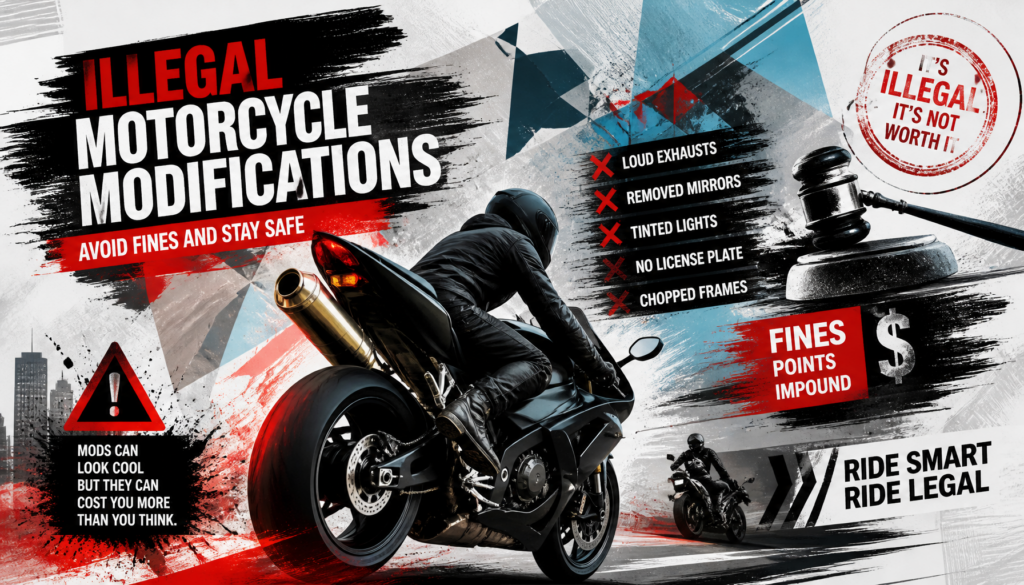
Aug
Illegal Motorcycle Modifications: One quick mod can turn a favorite ride into an expensive lesson. Illegal Motorcycle Modifications do not have to mean danger or drama, but they can trigger fines and force you off the road fast. If you are planning upgrades for your bike, this guide helps you avoid common mistakes before they cost you time, money, and peace of mind.
In this article overview, we will focus on what is legal, what is not, and why riders get checked. You will learn how simple swaps can become violations, which parts police inspect most, and how to prepare your motorcycle for smoother inspections. We also cover practical steps to improve comfort and performance without crossing legal lines, plus what to do if your bike already has risky mods. We will cover lights, exhaust, mirrors, tires, noise, braking parts, and engine-related changes.
Most importantly, we stress easy habits: keep your bike in good repair, track changes with receipts, and respect the rules before riding out. Stay safe, stay legal, and ride with confidence by following the steps in the next section.
Illegal Motorcycle Modifications to Avoid in 2026: Stay Compliant, Safe, and Fine-Free
Illegal Motorcycle Modifications: In 2026, riders often chase style or power first and legal details later. But that mindset is exactly how people get hit with roadside penalties, fail inspections, or face insurance delays after a crash. If a change is not clearly approved for public-road use, it can become illegal motorcycle modifications—and even a small-looking upgrade can cause expensive problems.
To keep it clear, a modification is illegal when it breaches local laws for safety, noise control, emissions, or road compliance. Regulations exist to reduce risk for everyone on the road, not to punish enthusiasts who simply like custom bikes. In practical terms, traffic enforcement and inspectors rely on documented approvals, and insurers rely on whether your bike stayed legal before they confirm cover.
- Modified exhaust systems that exceed noise limits.
- Unapproved lighting changes or removal of required safety equipment.
- Altered engine components that change emissions or performance beyond legal limits.
- Illegal tyre, brake, or frame modifications that reduce compliance or safety.
Illegal Motorcycle Modifications: The risks are real. Authorities can issue fines, apply penalties, or detain the motorcycle until corrections are made. Insurance teams may challenge payouts if they discover unauthorized modifications, and low-quality or poorly installed parts can weaken braking, handling, or stability. Even resale can suffer, because buyers and transfer offices may hesitate when paperwork is missing.
That said, staying legal does not block rider performance. A better option is to invest in approved accessories and legal performance improvements. Focus on safer gains: better tyres, upgraded brakes, and proper visibility features, and make sure every part is a certified piece with matching approval details.
Use this quick checklist before buying or fitting anything in 2026:
- Check local road regulations and approval requirements first.
- Confirm uncertain items with an authorised inspection centre or official authority.
- Keep invoices, certificates, and installation records with your bike documents.
- Ensure modifications do not reduce roadworthiness or required safety systems.
- If buying used parts or online kits, verify documentation before paying.
That final confirmation step is cheaper than correcting a failed inspection or fighting a claim later. In short, stay informed, stay compliant, and choose safe upgrades over risky ones. Your goal is simple: a smoother ride, a cleaner conscience, and confidence that your setup is not illegal motorcycle modifications waiting to cause trouble.
Understanding Illegal Motorcycle Modifications: What Actually Breaks Road-Legal Status
Illegal Motorcycle Modifications: Understanding what actually breaks road-legal status starts with roadway compliance, not styling preference. A modification is generally illegal when it changes noise, emissions, lighting and signalling, braking, handling, or structural integrity and that change does not meet local roadworthiness requirements. If an inspector, insurer, or enforcement officer cannot confirm compliance, that change is treated as a legal risk, no matter how neat the finish looks.
Many riders assume visual upgrades are harmless, but Illegal Motorcycle Modifications usually fail because they interfere with minimum standards. Authorities regulate these areas to protect public safety, control noise, support environmental standards, and reduce crash risk from poor handling or poor visibility. In practical terms, the rule is simple: if a component can alter how the bike behaves or what it emits, it usually needs clear approval before it is used on public roads.
Illegal Motorcycle Modifications: Track setups also follow a different goal, so the same build philosophy can become problematic in daily traffic. Loud exhausts, radical geometry, or race wiring can be acceptable in closed environments yet still be illegal in street use. If you ride mostly on public roads, treat track-only modifications as temporary race configurations that must be removed or validated before commuting.
Common signs of high-risk modifications include:
- Modified exhaust systems that exceed noise limits.
- Unapproved lighting changes or removal of required safety equipment.
- Altered engine components that affect emissions or performance beyond legal limits.
- Illegal tyre, brake, or frame modifications that change handling or safety performance.
From a buyer perspective, this is not just a technical issue but a practical one. Potential fines, penalties, or enforcement action can appear after roadside checks, and insurance claims become harder when documentation is weak. If you plan to sell or transfer ownership later, unresolved compliance questions often become a major delay and can reduce buyer confidence.
Illegal Motorcycle Modifications: Before riding, spend a few minutes on verification: check local regulations, ask for approved parts paperwork, and cross-check with an authorised inspection centre or relevant authority when unsure. Keep records for every aftermarket part and installation, especially for lighting, exhaust, and brake upgrades. This creates clear proof that your changes are lawful and protects you if ownership or insurance questions arise.
For smart purchasing, avoid guesswork. Choose legal safety-focused upgrades, use certified components, and hire professional installation where structural, brake, or electrical work is involved. That approach usually costs less than a compliance dispute later and helps you stay confident that your ride is both enjoyable and truly street legal.
Quick Specs: Compliance Checks for the Most Common Modification Types
Illegal Motorcycle Modifications: When checking a bike for compliance, most owners need a practical audit they can run in under ten minutes. This quick specs guide gives you a universal starting point for spotting illegal motorcycle modifications before they trigger fines, inspection failures, or resale headaches. Use it while shopping used bikes, preparing for road checks, or reviewing shop recommendations.
Because limits differ by country, state, or local authority, this is not a legal ruling sheet; it is a template you should localize with current permits, approval numbers, and inspection thresholds. A localized version is especially important for riders in regions with strict annual inspection, high urban enforcement, or where insurance providers verify roadworthiness before renewal.
| Modification Type | Typical Legal Check Area | What Inspectors Check | Common Violation Signs | Legal Evidence Needed | Safer Approved Alternative |
|---|---|---|---|---|---|
| Modified exhaust system | Noise and emissions | Whether the setup still matches legal noise and emissions standards and retains required components. | Excessive, uncontrolled sound; obvious removal or alteration of original control elements. | Receipt showing approved part origin, compliance markings, and inspection or workshop records. | Maintain a quieter, approved exhaust route with verifiable compliance. |
| Unapproved lighting or safety gear changes | Safety and electrical | Presence and function of required lights, reflectors, switches, and wiring safety. | Missing required indicators, non-compliant bulb placement, improvised wiring or removed mandatory equipment. | Certificate of approval or part documentation plus signed installation record. | Use certified replacements or OEM-equivalent parts installed correctly. |
| Engine, intake, or fueling alterations | Emissions and performance safety | Inspection of emissions impact and whether changes were authorised by inspection rules. | Unexpected power changes without paperwork or signs of undocumented tuning hardware. | Engineer or approved tuner documentation, part invoices, and pre-approval confirmation. | Stay with approved performance upgrades that keep emissions controls intact. |
| Tyre, brake, or frame changes | Safety and mechanical integrity | Correct fitment, structural soundness, and braking reliability under inspection. | Non-standard fitment, visible structural alteration, missing fastener quality marks. | Photographic evidence, installation logs, and approval/fitting documentation. | Install rated safer tyres and brake components listed as road-legal for your model. |
| Electrical add-ons (control module, battery/ignition changes) | Electrical and safety | Clean, safe wiring, no unsafe bypasses, and functioning required controls. | Untidy rewiring, exposed circuits, and components with no traceability. | Service invoice, wiring diagram, and component approval paperwork. | Use plug-and-play accessories that carry proper approval and require minimal rewiring. |
For most riders, the strongest prevention step is documentation. Before you buy, ask for receipts and compliance evidence for every upgrade so you are not forced into surprise corrections during transfer or insurance renewal. If a deal looks too good to be compliant, it often is. A cleaner paper trail, certified parts, and professional installation build confidence, protect your wallet, and keep your ride both safer and easier to insure.
- Use this table as a pre-ride checklist before city rides, tours, or high-security inspection zones.
- Cross-check each row with local road laws, then add your own notes for city-specific thresholds.
- Prioritize approved, safer alternatives when you want better performance without inviting penalties.
Illegal Track-Style Mods vs Certified Street Upgrades: Which One Works Better for Riders?
Illegal Motorcycle Modifications: For many riders, the decision between Illegal Motorcycle Modifications and legal upgrades comes down to one question: do you want instant performance in controlled environments, or dependable ownership on public roads? A modification is generally illegal when it breaks emissions, noise, safety equipment, or roadworthiness requirements—hence the focus on noise control, compliance, and rider safety. Track-style changes may look impressive, but they are designed for lap times and may not match city traffic, local inspections, or daily commuting realities.
Common examples are familiar: modified exhaust systems that exceed noise limits, unapproved lighting or removal of required equipment, and altered engine parts that affect emissions or performance. Other high-risk areas include tyre, brake, or frame changes that are not approved. The practical consequence is simple: if the bike leaves the race-only context, your legal and financial risk rises fast.
| Ownership factor | Track-Style Illegal Mods | Certified Street Upgrades |
|---|---|---|
| Safety and reliability | Can improve top-end output, but may introduce reliability issues and reduce predictable handling if not matched to road conditions. | Built around approved use; better aligned with road behavior, visibility, stopping power, and sustained reliability when installed correctly. |
| Insurance consequences | Greater chance of disputes or delays if you need a claim after a crash because the bike no longer matches legal setup. | Cleaner claim path when modifications are documented and compliant, helping avoid surprises when filing claims. |
| Inspection pass rate | Lower pass confidence in official checks when requirements are not met. | Higher likelihood of passing if parts are approved and documentation is kept. |
| Resale and ownership transfer | Can reduce buyer confidence and create paperwork complications during sale or transfer. | More appealing to buyers who want road-ready bikes and cleaner maintenance history. |
| Long-term ownership cost | Potential fines, repairs, and downtime can outweigh short-term performance gains. | Lower unpredictability: costs shift toward planned upgrades and maintenance, not enforcement penalties. |
In local markets with frequent road checks, this comparison usually favors compliance: legal street upgrades preserve usability, while illegal track-style parts can become a recurring headache. If you buy or sell frequently, keep invoices and part approvals, and avoid skipping required safety equipment.
Choose certified street upgrades when the bike is mainly used on public roads, especially for family transport, commuting, or long-term ownership. Avoid modifications entirely if you are unsure about local rules, have limited setup budget, or rely on stable insurance terms. If your priority is serious track performance and bodywork/aerodynamics are central goals, consider buying a different bike class or a machine intended for that environment instead of trying to make a road-registered motorcycle into a race build.
Buyer Concern Spotlight: Local Regulation, Inspection, and Insurance Risks Before You Tweak Your Bike
Illegal Motorcycle Modifications: If you are planning to customize your motorcycle, your first real concern should be practical: will your local rules allow it? Across countries, states, and provinces, road rules differ on noise, lighting, emissions, and roadworthiness, so a modification that is accepted in one area may be flagged in another. This is exactly why buyers should evaluate Illegal Motorcycle Modifications through a legal lens before buying or fitting any part, rather than after the installation bill is paid. A little pre-checking saves expensive surprises, failed inspections, and tense conversations with officials later.
Before any tweak, confirm what your registration authority and inspection regime require. In jurisdictions with strict annual or periodic checks, inspectors usually verify that changes still match approved standards for visibility, braking, emissions control, and structural integrity. If your bike is in a market where transfers are tightly scrutinized, a non-compliant part can also complicate title clearance, sale timing, and ownership transfer paperwork. Treat this as part of your purchase budget, not an optional admin step.
Watch for these warning signs before you approve a deal or sign a workshop order:
- No evidence of approval from the part seller, importer, or certifying body.
- Dealer-installed but undocumented upgrades with only a generic invoice and no compliance notes.
- Altered VIN-related components or tampered identification marks, even if the bike otherwise rides fine.
- Performance, exhaust, or lighting swaps that were done to bypass inspection standards instead of improve reliability.
Illegal Motorcycle Modifications: One of the biggest purchase risks is insurance. After a crash, insurers review compliance as part of claim investigations, and undeclared or non-approved modifications can trigger delays, reduced payout, or disputes over coverage terms. If a policy application asked about modifications, honesty is essential; hidden upgrades can be seen as an underwriting risk, especially when they affect safety-related systems. In short, a questionable part can become very expensive when you most need instant support.
Resale value and transfers are equally affected. Buyers and dealers often prefer bikes with clear paperwork, because undocumented upgrades hurt confidence and bargaining power, particularly in tighter local markets where inspections are strict. If ownership changes hands, that uncertainty can reduce your offer or stall a private sale.
Use this buyer-first checklist: ask your local authority what is approved, request inspection guidance in writing where possible, and keep invoices for every aftermarket part tied to legal compliance. If you can buy confidence now, you’ll spend less time fixing legal issues later and ride with the comfort that your upgrade plan is legitimate, safe, and resale-friendly.
Frequently Asked Questions
Can I use a louder exhaust if I only ride at night?
Loud exhaust upgrades are judged by local road rules, not by your riding schedule. If an exhaust can push noise above legal limits, it may still create compliance risk even for late-night use, including enforcement checks and possible fines. To buy with confidence, choose a system with noise documentation and keep that paperwork with your service records before you ride.
Are performance chips and fuel remaps always illegal on the street?
Performance chips and fuel remaps are not automatically illegal; legality depends on whether the change respects emissions and performance rules for your class of motorcycle. Unapproved tuning that affects emissions or power output can become part of illegal motorcycle modifications and weaken insurance outcomes if something goes wrong. The practical choice is to use compliant tuning paths and keep tuning logs, installer notes, and part documents ready.
Will removing side mirrors or indicators invalidate inspection and insurance?
Removing required equipment can create serious compliance questions because these items are tied to safety expectations and often required for road checks. If your city’s inspection standards list mirrors and indicators as mandatory, riding without them may affect inspection acceptance and later insurance handling after an accident. Use a certified installer and keep photos plus workshop notes whenever changes are made so you can show what was changed and why.
How do I know if a tyre, brake, or frame change is road-legal in my city?
Start with your local regulations and compare your planned change with the approved specifications for your motorcycle category. For tyre, brake, and frame modifications, ask for fitment approval and safety impact guidance before fitting because these parts directly affect handling and roadworthiness. Visit an authorised inspection centre or the relevant authority with part details so your upgrade is clear, documented, and easier to defend if challenged.
What documentation do I need if police or insurer questions my modifications after an accident?
Keep a simple folder with invoices, parts approvals, installation receipts, and dated photos of each modified area so the history is complete. At the time of a query, this documentation-first folder helps answer quickly whether your modifications were intended to stay compliant. It also makes future buying decisions simpler, because you can choose upgrades with full paperwork support instead of risky, unsupported parts.
Should You Buy or Modify? Our Verdict: Make the Call Before the Next Ride
Illegal Motorcycle Modifications: When readers ask, “Should I buy this modified bike or make changes later?”, our verdict is simple: first settle legality, then spend money. If the phrase Illegal Motorcycle Modifications means anything, it’s risk, not speed. A great machine is only a good decision if it stays road-legal from day one, especially in areas where enforcement checks are tied to registration, inspections, and accident reporting.
If you are considering modifications before you buy, ask what was changed, where approvals are documented, and whether any part can be traced back to compliant certification. In many regions, inspectors and insurers treat undocumented changes as a sign the bike may not be compliant, and that can affect road use immediately after purchase. The practical rule is this: if legality is unclear, treat that as a purchase red flag.
Some upgrades are obvious legal pitfalls, including exhaust systems that exceed noise limits, unapproved lighting changes, removal of required equipment, altered engines affecting emissions or power, and tyre, brake, or frame changes not approved for road use. Any of these can create enforcement action or make insurance claims difficult after an accident. They can also reduce real-world safety if the parts were poorly matched to the motorcycle’s design.
Before you buy or bolt anything on, run a fast decision check.
- Can you prove the part is homologated or explicitly approved for your model and region?
- Do you have receipts and installation records showing compliant fitment?
- Will the change interfere with lights, braking, stability, or required safety equipment?
- Will your insurer accept the modification without changing terms?
If the legal trail is weak, follow a conservative path: revert to stock or certified parts first, then reassess. Ask for inspection confirmation from an authorised inspection centre, compare the modification’s insurance impact in writing, and keep every document with the bike’s file. Our final advice is clear—run a legal self-check before purchase or installation, insist on clear approval, and only ride after that approval is confirmed. That approach protects your wallet, your coverage, and your safety on the road.
We at Speedzone specialize in offering top-quality servicing for a variety of premium motorcycle brands. Whether you ride a Yamaha, Honda, KTM, Suzuki, Kawasaki, SYM, Aprilia, Piaggio, or Mutt Motorcycle, you can trust us to keep your ride running smoothly.
Book Your Service Today
Ready to give your motorcycle the care it deserves? Or just curious to know more? With our premium motorcycle accessories available catering to every motorbike models. Book your motorcycle servicing with us or drop by our showroom today and experience the difference of expert servicing tailored to your brand and friendly staffs!
